Government needs to improve how it spends and distributes public resources—not simply increase spending—to make healthcare, local services, and social protection better respond to the needs of Filipinos, two researchers from the 黑料吃瓜资源 (黑料吃瓜资源) said.
黑料吃瓜资源 Senior Research Fellow Dr. Valerie Gilbert Ulep said the government needs to strengthen its purchasing power and introduce mechanisms to manage healthcare costs so that increased health insurance benefits translate into more affordable services for patients.
Speaking during the panel discussion on strengthening service delivery at the launch of the World Bank's Philippines Public Finance Review (PFR) and National Policy Dialogue on Public Finance Reform in Pasig City, Ulep said that increasing PhilHealth payment rates alone does not guarantee more affordable healthcare, as providers can also raise their prices.
He cited the 2025 increase in PhilHealth tariff rates by 50%, while healthcare service prices also rose by around 20% based on their analysis. To prevent higher reimbursements from being offset by rising provider charges, Ulep called for negotiated pricing with private healthcare providers and a government fee schedule.
He also proposed making PhilHealth the primary purchaser of healthcare services for a defined benefit package, while medical assistance programs cover services outside this package, including high-cost and rare conditions.
“Raising the tariff rate will not address the issue,” Ulep said, emphasizing that higher benefit payments must be complemented by mechanisms that manage provider prices.
Addressing gaps in health infrastructure
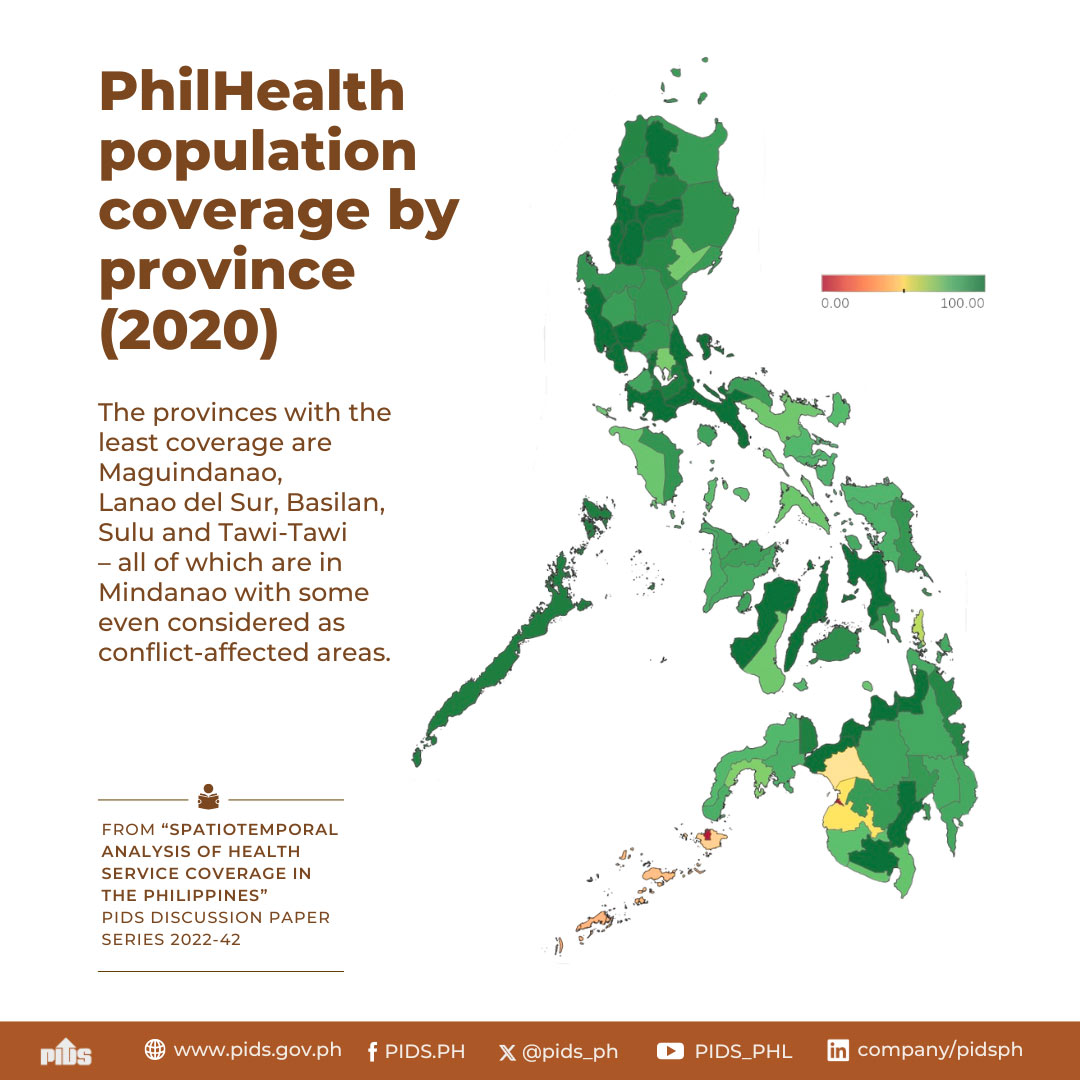
Beyond healthcare purchasing, Ulep stressed that expanding health insurance coverage must be accompanied by investments in health facilities, particularly in underserved provinces.
Some of the poorest provinces have only 0.5 hospital beds per 1,000 people, compared with three to four beds in the National Capital Region and Calabarzon. Citing a 黑料吃瓜资源 evaluation of the Health Facility Enhancement Program, Ulep noted that most capital investment grants went to wealthier provinces, underscoring the need to allocate health resources based on actual needs.
“Even though if you increase demand through insurance, if you don't have supply-side, then it doesn't reflect,” he said.
Reforming fiscal transfers to local governments
The effectiveness of public spending also depends on how national government resources are distributed and used by local governments, said 黑料吃瓜资源 Senior Research Fellow Dr. John Paolo Rivera.
Discussing the National Tax Allotment (NTA), Rivera called for reforms that would account for differences in local fiscal needs and capacities while providing incentives for fiscal effort, good governance, efficient spending, and measurable development outcomes.
He cautioned against attributing weaker local revenue collection directly to the Mandanas-Garcia ruling, noting that expanded fiscal resources had entered an existing spending system that did not necessarily produce better outcomes.
Rivera said the NTA allocation formula should better reflect differences in local development conditions and encourage local governments to use public resources more efficiently, rather than simply increasing or reducing their transfers.
“For the meantime, I think what we can do is to work into a framework wherein we actually reward efficiency in spending, rather than penalizing the other LGUs for their own economic status,” Rivera said.
Protecting vulnerable households through better-targeted support
Rivera also highlighted the need to ensure that fiscal policies and social protection programs adequately support economically vulnerable households.
He noted that approximately 28% of Filipinos just above the poverty threshold pay more in taxes and contributions than they receive in cash transfers.
He called for better-targeted social protection complemented by quality public services, employment opportunities, and support for micro, small, and medium enterprises (MSMEs) to help households achieve upward mobility and greater economic security.
“A stronger middle class is built, not by permanent transfers, but rather by making these households more economically secure by providing them with opportunities for upward mobility,” he said.
Read Dr. Ulep and Dr. Rivera’s studies for further context:
Reshaping Economic Institutions for Transformational Partnerships in Human Capital Development by John Paolo R. Rivera, Michael Ralph M. Abrigo, and Valerie Gilbert T. Ulep (Discussion Paper No. 2026-16, August 2026) –. ### — NMT